

It was a sunny day in May when Captain George Sykes heard the news: soldiers were trading government supplies from Fort Union for sexual favors. Sykes flew into a rage.
Upon learning that soldiers were stealing government property and trading it for sex and alcohol, Sykes decided to make an example of them. The traded goods included food rations, boots, jackets, and other supplies. Sykes soon learned that the women involved had set up camp in nearby caves.
Sykes raided the encampment and rounded up the accused women. In full view of local onlookers, he had their heads shaved by force. Shamed and humiliated, the women were barred from returning to the fort. In Spanish, local residents dubbed the site El Cañon de las Pelonas (”The Canyon of the Bald Women”).
However, the women’s desire to acquire government property outweighed the shame. They packed up their belongings, abandoned the caves, and headed straight for La Loma Parda.
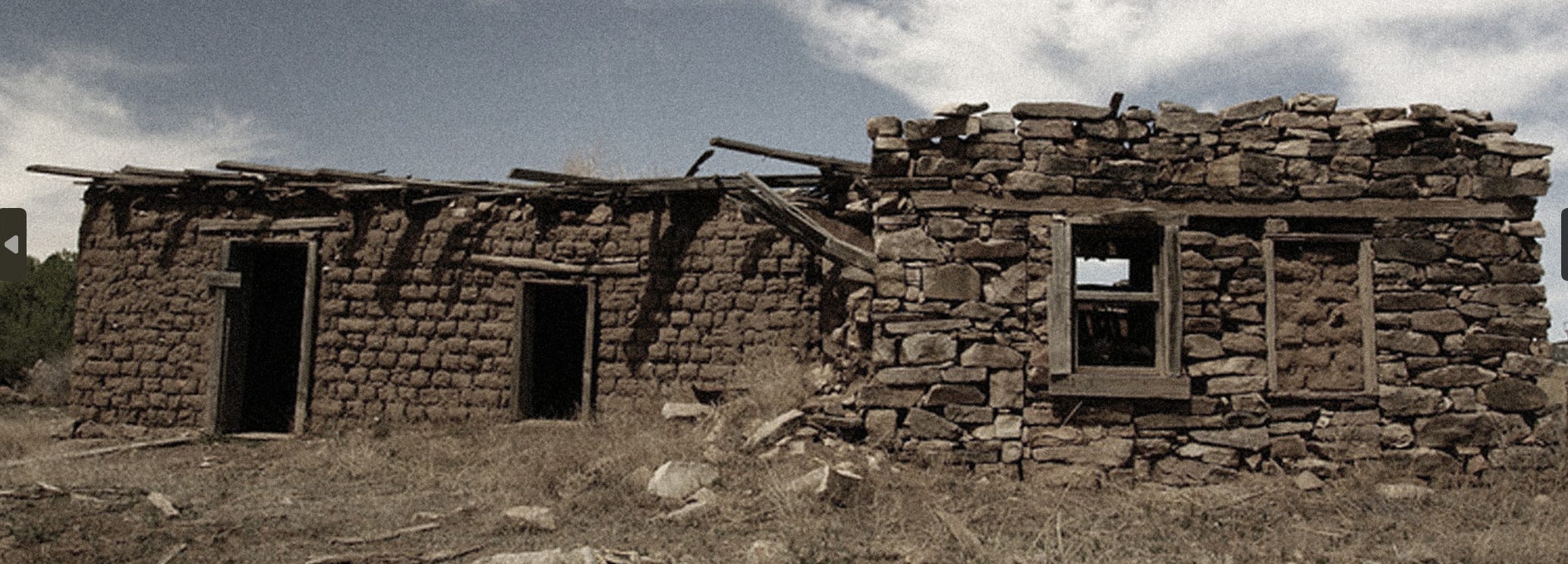
Loma Parda—whose name translates to “Tan,” “Brown,” or “Tawny Hill”—was established in 1835 by Spanish and Genízero families. In the 1840s, it was a quiet settlement of roughly 500 residents. All of that changed with the arrival of the military at Fort Union.
What began in 1850 as a rudimentary log fort underwent continuous upgrades, eventually becoming the “Third Fort” (1863–1869)—a massive, permanent installation. Its immense Quartermaster and Ordnance Depots made it the largest military post in the American Southwest.
That sudden concentration of wealth and military activity drew people like flies. The residents of Mora quickly realized that a steady stream of goods flowed into Fort Union. At the same time, the soldiers stationed in the far West—assigned to guard the endless flow of settlers and traders on the Santa Fe Trail—were far from home. Some found their deployment exciting, while others were simply lonely.
Loma Parda grew rapidly—first as a place to spend money, drink, gamble, and raise hell, and by 1855 as the premier destination for weary travelers who had just endured the long trek across the Great Plains.
The arrival of a trail train must have been quite a sight. Wagons traveled in caravans of 20 to 50 vehicles, guarded by wagonmasters and teamsters (known as “mule skinners” or “bullwhackers”) driving heavy 10-to-12-oxen or 6-to-8-mule teams. They rolled along alongside massive Murphy freight wagons, classic Conestogas, and humble prairie schooners. Stagecoaches, which had been running monthly mail and passenger service between Independence, Missouri, and Santa Fe since May 1850, also kicked up dust on the road.
By the time these travelers reached Fort Union or the stage station near Watrous, they were thirsty and eager for recreation.
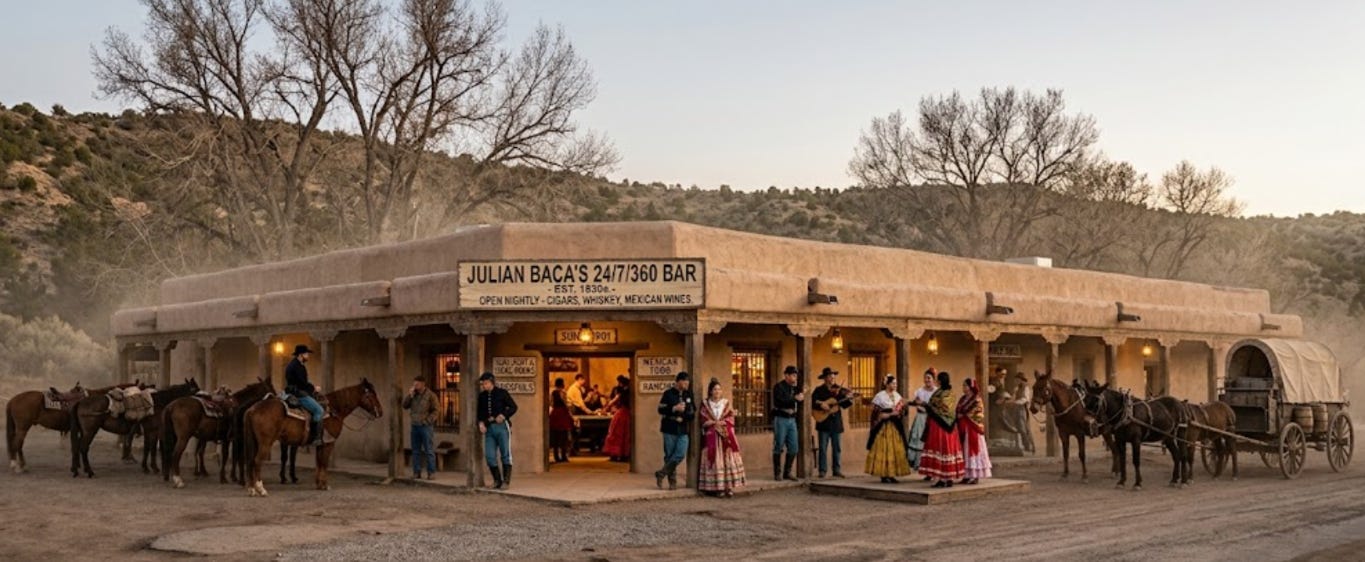
To blow off steam, settlers, traders, mule skinners, and soldiers all headed to Loma Parda. It was the place to be on a Friday or Saturday night. Julian Baca’s Saloon was open practically 24/7. The town’s dance halls, cantinas, and saloons all needed women to stay profitable, offering local women from Mora a rare chance to earn an independent income. As the saying went, it was better to be a bailadora than a dirt farmer.
The debauchery earned the town a notorious nickname: “The Sodom on the Mora.” Everything was for sale. By the 1860s, few places in the American West were wilder; only San Francisco during the 1849 Gold Rush or the lawless borderlands rivaled it.
This wild era lasted for decades. The end finally came in the late 1880s, when the arrival of the Atchison, Topeka and Santa Fe Railway in Las Vegas rendered wagon trains and Fort Union obsolete.
And what became of the women? They likely assumed their stories would blow over and that the history of La Loma Parda would fade into the dust. But their legacy lives on in genetic code.
DNA doesn’t lie. It doesn’t listen to rumors, chisme, or mitote. Looking at my own results—which made my jaw hit the floor when I first saw them—is less like reading a romantic novel and more like listening to a song. To the cadence of Mambo No. 5:
A little bit of English on the side,
A little bit of Irish in the eve,
A little bit of Pueblo in the sun,
A little bit of Basque to get things done,
A little bit of Crypto-Jew hiding in the pines,
A little bit of Italian to say “basta” to the pasta... And more
As a child, I overheard hushed kitchen conversations about an aunt of my grandmother who had eight children by eight different men. When the adults realized I was listening, they switched to Spanish, assuming it was a secret code. But I understood every word before being chased out of the room!
I’m not saying all that diverse DNA came directly from La Loma Parda... but if not from there, then where?